
Body Image in the Media: What the Data Shows, and What Actually Helps
What does media actually do to how we see ourselves? The answer changes by age, platform, and gender – but the data is now too clear to ignore. From the first diet comment at age five to algorithmic pressure in adulthood, this is what research reveals, and what actually helps.
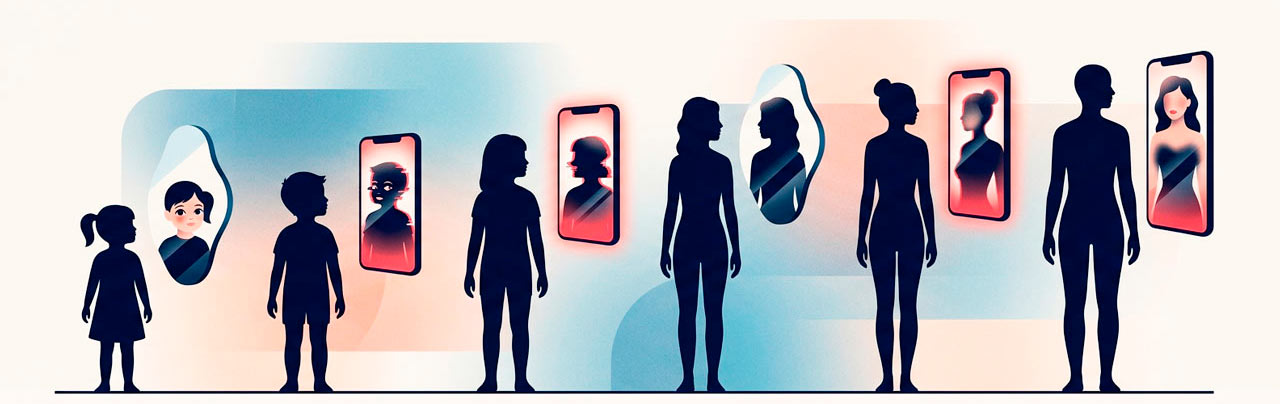
The Numbers: How Media Affects Body Image at Every Age
Body image development starts younger than most people realize, and media is a significant factor at every stage. Here is what peer-reviewed research documents:
| Age | What Happens | Source |
|---|---|---|
| 5 | Some children report having tried dieting | Common Sense Media |
| 6-8 | Over half of girls and 1/3 of boys are unhappy with body weight | British Journal of Health Psychology |
| 10 | 80%+ of children report fear of being “fat” | Social Media Victims Law Center |
| 13 | Nearly 50% of girls report body dissatisfaction | Ballard Brief / BYU |
| 13-17 | 46% of teens say social media makes them feel worse about their body | Digital Wellness Lab (2022) |
| 17 | 78% of U.S. girls are unhappy with their weight | Gallivan / Adolescent Health |
| Adults | 80% of women and 34% of men are unhappy with their appearance | Common Sense Media / SMV Law Center |
A 2025 study published in JAMA Pediatrics tracked 154 teenagers over six months using an app that took screenshots of their phone usage. The researchers found that certain platforms exposed teens to more potentially harmful content than others – and that content type mattered more than total screen time.
“Although many people are still worried about screen time, when it comes to teen social media use, duration of screen time may be less important than the content on these platforms.”
– Xiaoran Sun, University of Minnesota (JAMA Pediatrics, 2025)
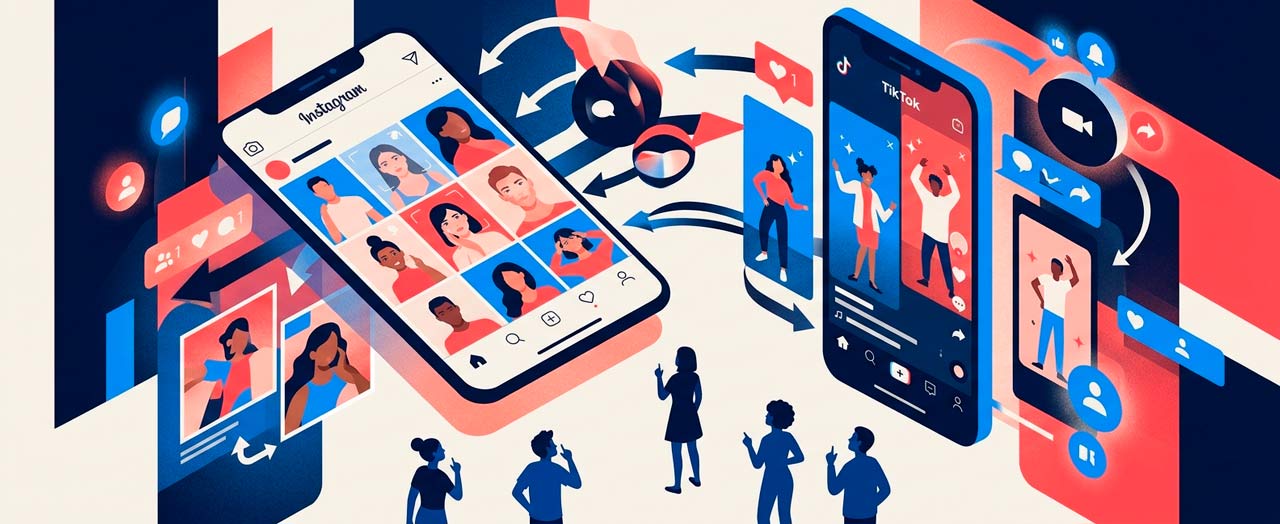
Platform-by-Platform: Where Body Image Damage Happens
| Platform | Key Body Image Finding |
|---|---|
| 42% of teen users reported cyberbullying; algorithm amplifies appearance content; 90.9% of adolescents use it (PMC study) | |
| TikTok | Nutritional posts disproportionately created by young white women equating thinness with health; AI sentiment detection reduced toxic comments 21% (2025) |
| YouTube | 79% of youth report cyberbullying; fitness content creates both positive motivation and unhealthy comparison |
| Snapchat | Beauty filters normalize altered faces; 90.7% of adolescents use it; disappearing content reduces accountability |
| Visual-first design promotes idealized body imagery; predominantly female user base amplifies thin-ideal content |
A 2025 cross-sectional study of 211 participants (Nutrients journal) found that exposure to athletic “fitspiration” images decreased self-esteem in 37% of participants, with significantly stronger effects among women (p = 0.004). Gender was a significant factor in tendency to compare oneself with athletic individuals (p = 0.02).
For boys and men, the image and media dynamic is also damaging. Over 50% of male youth reported concerns about body size in a 2025 global study. Following fitness influencers on social media may lead to internalization of muscular ideals and, in extreme cases, steroid use – 11% of U.S. high schoolers reported AI voice cloning harassment in voice chat apps, reflecting how digital aggression takes new forms.
Those patterns aren’t unique to beauty or fitness content. The same infrastructure – algorithmic amplification, exploitation of self‑doubt, and variable reward loops – appears across other commercial systems. One of the fastest‑growing, least‑discussed examples is online gambling, which has quietly borrowed the playbook of body‑image manipulation.
Where The Comparison Economy Leads Next
At first glance, online casinos and body image don’t belong in the same sentence. But peer‑reviewed data from 2024-2025 shows otherwise: gambling platforms target the very same vulnerabilities that beauty algorithms do.
- Emotional spill‑over after social comparison. Adolescents who report negative body image are 2.3 times more likely to accept high‑risk bets (Journal of Behavioural Addictions, 2024). The urge to “fix” self‑esteem quickly – familiar to anyone who’s ever chased a filter or a like – transfers easily to slot‑machine mechanics.
- Hidden influencer integration. A Canadian cross‑platform audit (MediaSmarts, 2025) found that 31% of young adults aged 18-24 had seen casino promo codes inside Instagram Stories posted by fitness influencers who previously built their brand on “body acceptance.” That dissonance is not accidental – gambling is sold as another tool to achieve a socially rewarded image: wealthy, confident, and lean.
- Gender‑targeted design. Drawing on eGirls Project findings (2023, University of Ottawa), teenage girls receive four times more targeted ads for “free spins” paired with aspirational body imagery (fashion, thinness, luxury) compared to boys. Gambling is framed not as risk, but as a shortcut to the same visually idealised life that beauty filters promise.
- Algorithmic reinforcement loops. Like beauty content, casino platforms use unpredictable rewards (near‑misses, small wins) to keep users engaged. Newer platforms such as Stake and Roobet have started testing AR “winner previews” – users see their own face superimposed on a model’s body with luxury clothes, directly weaponising body dissatisfaction to drive deposits.
What this means for classrooms and parents
TikTok began blocking direct casino links in Canada in late 2025, but workarounds (promo‑code masking, “free‑spin challenges”) remain common. The practical activities in the next section – especially the “Who Profits?” Map and the Algorithmic Audit – work just as well for surfacing gambling‑related manipulation as they do for beauty content.
None of this suggests that gambling is overtaking body image as a primary concern. Instead, it shows how universal these attention‑harvesting systems are. That’s precisely why the eGirls Project’s call for systemic platform change – not just individual resilience – matters as much for gambling as it does for filtered selfies.
The eGirls Project’s Contribution
As part of the eGirls Project, researchers investigated how online social networking intersects with gender performativity and body image. Participants described a paradox: they were intellectually aware that media images were unrealistic, yet emotionally compelled to conform. Research from The eGirls Project and The eQuality Project shows girls have developed a number of coping strategies – grounded in girls’ own lived experiences, needs and aspirations – but individual resilience cannot replace systemic platform change.
The project’s outreach materials on body image in the media, developed with MediaSmarts, remain some of the most practically useful outputs of the initiative.
10 Body Image Activities for Classrooms (With Age Ranges)
Effective body image education doesn’t lecture – it builds analytical skills. Here are ten evidence-informed activities educators can adapt:
| # | Activity | How It Works | Ages |
|---|---|---|---|
| 1 | Filter Before/After | Students view the same face with and without filters. Discussion: What changed? What message does the filtered version send? | 12-18 |
| 2 | Ad Deconstruction Lab | Groups dissect a beauty product ad. Identify: target audience, emotional hook, body parts emphasized, what’s promised vs. realistic | 13-18 |
| 3 | 7-Day Media Diary | Students log every body-related message they encounter across all media for one week. Class shares aggregate patterns | 14-18 |
| 4 | Algorithmic Audit | Students screenshot their own social feeds, categorize content types, calculate % appearance-focused. Compare across class | 15-18 |
| 5 | Counter-Ad Creation | Students create an advertisement that sells the same product without using body insecurity. Present and vote on most effective | 13-18 |
| 6 | “Who Profits?” Map | Students trace the money: who profits when you feel bad about your body? Map: platform → advertiser → product → your attention | 14-18 |
| 7 | Historical Beauty Standards Timeline | Students research beauty ideals across decades/cultures. Takeaway: standards are constructed, not natural | 12-16 |
| 8 | Influencer Reality Check | Students research what one fitness influencer’s “typical day” actually involves (team, lighting, editing, sponsorships) | 14-18 |
| 9 | Comment Section Analysis | Students analyze 50 comments on a celebrity’s post. Categorize: positive, negative, appearance-focused, content-focused | 13-18 |
| 10 | Personal Media Plan | Each student designs their own “body-positive feed”: who to follow, what to mute, how to audit monthly | 13-18 |
What’s New in 2025-2026: Platform Responses
| Development | Detail |
|---|---|
| Meta “Protect Teens Mode” | Restricts interaction from unfamiliar users under 18; 3.5 million accounts enrolled (2025) |
| TikTok AI Sentiment Detection | Reduced toxic comments by 21% in Q1 2025 |
| YouTube Kids Layered Filters | New derogatory language filters reduced reported incidents by 30% |
| AI Fake Profiles | 225% year-over-year increase in AI-generated profile photos (SQ Magazine 2026) |
| VR Empathy Simulations | Schools piloting virtual reality tools to help students experience effects of online bullying |
| Xbox Trust & Safety | Real-time bullying detection flags 9,700 abuse cases daily in gaming communities |
“There’s a lot of inequity in the world, but we have the power to fix representation in media overnight.”
– Geena Davis, Geena Davis Institute on Gender in Media
Practical Takeaways
For parents: the single most effective intervention is co-viewing and discussing media together. Ask what your child saw today that made them feel good or bad about their body. Don’t dismiss – discuss.
For educators: body image activities work best when they build analytical skills, not shame. Start with the 7-Day Media Diary (activity #3 above) – it requires no special materials and generates real classroom discussion.
For young people: your feed is not reality. It’s an algorithm optimized for engagement, not your wellbeing. You can audit and reshape it. Activity #10 above is designed exactly for this.