
Gender and Media: The Data on Representation, Stereotypes, and What’s Changing
The 2025 Global Media Monitoring Project (GMMP) – the world’s largest study on gender representation in news – produced results that are hard to ignore:
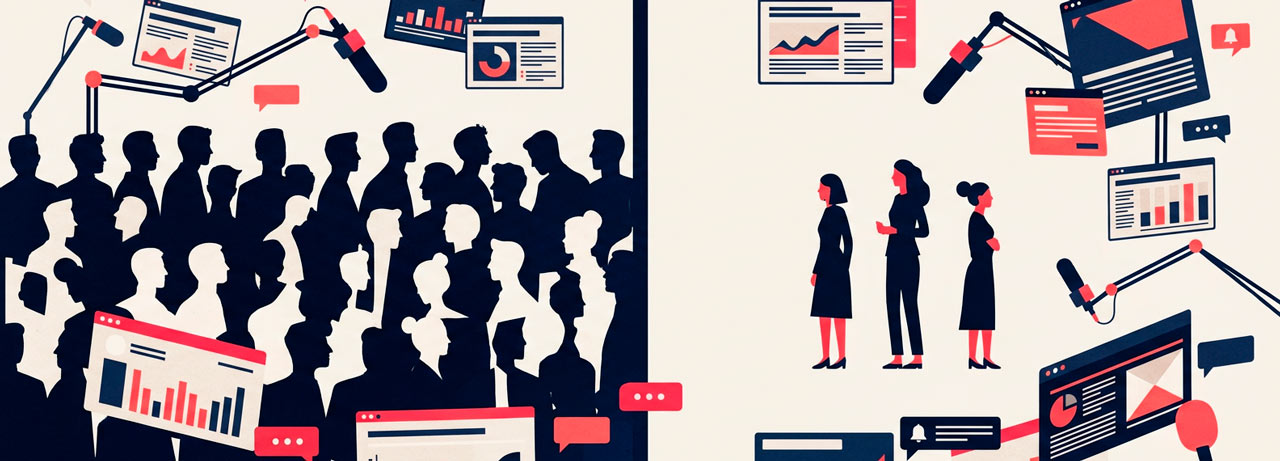
| Metric | Number | Source |
|---|---|---|
| Women as news subjects/sources globally | 26% | GMMP 2025 |
| Women reporters in traditional news | 41% (up from 28% in 1995) | GMMP 2025 |
| Stories by women journalists that include women subjects | 29% | GMMP 2025 |
| Stories by men journalists that include women subjects | 24% | GMMP 2025 |
| News stories that explicitly challenge gender stereotypes | 4% | GMMP / Giving Compass |
| Women as subjects in political/government coverage | 16% | Global Citizen / GMMP |
“When women are missing, democracy is incomplete.”
– Kirsi Madi, UN Women Deputy Executive Director (September 2025)
Gender Representation in Media: Entertainment and Film
Entertainment media shapes gender attitudes from childhood. Here is where things stand:
| Area | Current Status |
|---|---|
| Female leads in U.S. family films | Gender parity reached (up from 11% in 2004) – Geena Davis Institute |
| Female directors on broadcast TV | Only 19% of programs employ female directors |
| Writers in entertainment | 75% are men |
| Female music producers | Less than 3% – a share that has declined since 2012 |
| Golden Globe Best Director nominees since 2010 | Only 2 out of 40 have been women |
| Female actors 13-20 in top-grossing films | ~36% display nudity; 40%+ appear in sexualized attire (Statista) |
“I created this research institute 20 years ago because when I first saw kids’ shows through my toddler daughter’s eyes, I was stunned by the lack of female characters. Back in 2004, only 11% of family films had female leads.”
– Geena Davis, Geena Davis Institute on Gender in Media
How Media on Gender Roles Affects Young People
The connection between media exposure and gender attitudes starts early. Here are specific documented effects:
| Age/Stage | What Research Shows |
|---|---|
| Ages 5-6 | Body image development begins; some 5-year-olds report dieting (Common Sense Media) |
| Ages 6-8 | More than half of girls and one-third of boys are unhappy with body weight (British Journal of Health Psychology) |
| Age 10 | Over 80% of children report being afraid of being “fat” |
| Age 13 | Nearly 50% of girls report unhappiness with their bodies |
| Age 17 | 78% of U.S. girls are unhappy with their weight |
| Adults 18-29 | 67% have been targets of online harassment (Pew Research) |
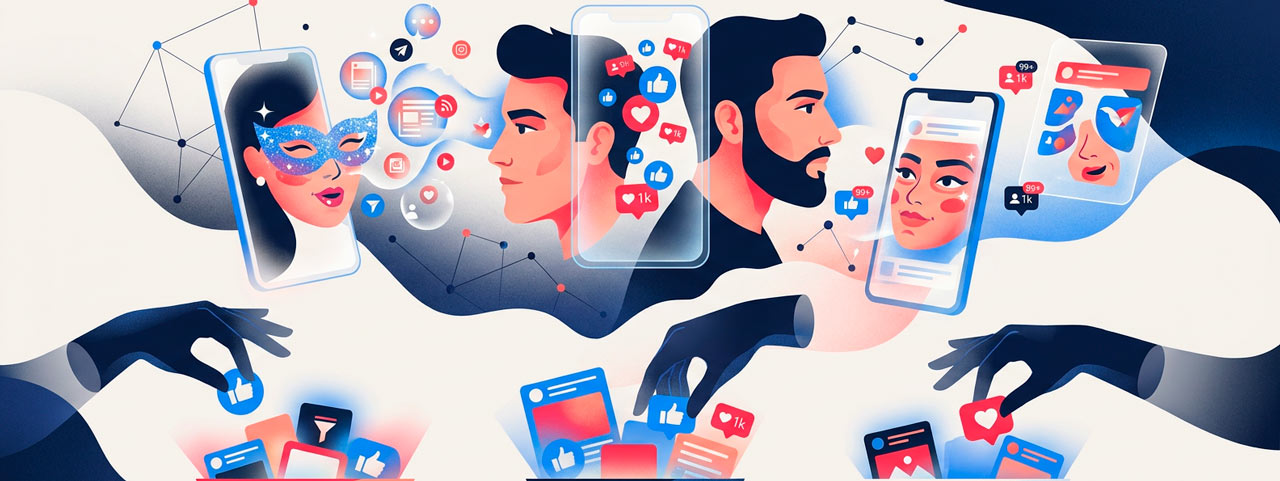
Studies connected to The eGirls Project at the University of Ottawa found that teenage girls are acutely aware of these patterns. As part of the eGirls Project, a research partnership investigating the relationship between gender, privacy, and online social networking, researchers documented how platform affordances mediate teens’ gender and sexual cultures – meaning that the design of apps like Instagram and TikTok actively shapes what kinds of gender expression get rewarded with attention.
Media and Gender Roles on Social Platforms
Social media has added new dimensions to gender and media dynamics. Some key developments:
| Platform Dynamic | Effect on Gender Roles |
|---|---|
| Algorithmic amplification | Content fitting existing stereotypes gets more reach, creating feedback loops |
| Influencer economy | Appearance-based content is disproportionately rewarded with sponsorships for women |
| Filter culture | Beauty filters normalize altered appearances – one study found 37% of users experienced lower self-esteem after viewing fitness content |
| AI-generated content | 225% year-over-year increase in fake profile photos (SQ Magazine 2026) |
| Content moderation bias | Less-common languages receive poorer content moderation, affecting gender-based harassment |
In Canada specifically, 44% of women and gender-diverse individuals have faced online hate. Among Indigenous women, 30% reported unwanted online behaviour. These numbers from BroadbandSearch underscore that gender and media intersects with safety, not just representation.
What’s Being Done: Organizations and Initiatives
| Organization | What They Do | Key Resource |
|---|---|---|
| MediaSmarts (Canada) | Digital and media literacy education for K-12 | USE, UNDERSTAND & CREATE framework |
| Geena Davis Institute | Research on gender representation in entertainment | Annual “See Jane” reports |
| UN Women / GMMP | 30 years of global gender-in-media monitoring | GMMP 2025 full report (free) |
| Common Sense Education | Digital citizenship curriculum with gender modules | Free lesson plans, grades K-12 |
| The eQuality Project | Research on privacy, targeting, and cyberbullying through equality lens | equalityproject.ca |
The eGirls Project contributed directly to this ecosystem. Its outreach materials, developed with MediaSmarts, connected academic research to practical classroom tools on gender performativity in selfie culture, the economics of attention, and gendered advertising.
What Individuals Can Do
Structural change takes time. In the meantime, here are evidence-based actions:
| For Parents | For Educators | For Young People |
|---|---|---|
| Watch and discuss media together – co-viewing builds critical thinking | Use GMMP data as a classroom exercise: count gender in one day’s news | Follow diverse accounts that challenge narrow beauty/gender norms |
| Ask “Whose story is being told? Whose isn’t?” | Assign media diary projects tracking gender representation | Use platform reporting tools when you see gender-based harassment |
| Check privacy settings on children’s accounts quarterly | Integrate MediaSmarts lesson plans into existing curriculum | Remember: algorithms show you what keeps you scrolling, not what’s true |
Canada’s upcoming privacy reform and the EU Action Plan against cyberbullying (expected early 2026) may create structural pressure on platforms. But media literacy – understanding how media and gender roles interact – remains the most portable skill anyone can develop.