
Online Privacy and Digital Citizenship: What Every Parent, Educator, and Young Person Needs to Know
The Cyberbullying Research Center surveyed 3,466 U.S. teens aged 13-17 in 2025. The trend lines are unambiguous:
| Metric | 2016 | 2019 | 2021 | 2025 | Trend |
|---|---|---|---|---|---|
| Lifetime cyberbullying victimization | 33.6% | 36.5% | 45.5% | 58.2% | ↑ +73% in 9 years |
| 30-day cyberbullying rate | 16.5% | 17.4% | 23.2% | 32.7% | ↑ Nearly doubled |
| Lifetime cyberbullying offending | ~6% | 14.0% | 13.8% | 24.5% | ↑ +75% |
| 30-day offending | ~5% | 5.3% | 6.3% | 16.1% | ↑ +168% |
| Students missing school | 10.3% | 12.6% | 15.0% | 19.2% | ↑ +86% |
| Students saying it’s “a big problem” | 43% | – | – | 54% | ↑ +11 points |
A critical finding: boys are now more likely than girls to report both experiencing and perpetrating cyberbullying (36.6% vs. 28.6% for victimization; 21.7% vs. 10.4% for offending). This reverses earlier research that found roughly equal rates.
Globally, 30.5% of adolescents have been bullied at school (PACER). In Canada, 44% of women and gender-diverse individuals have faced online hate, with 30% of Indigenous women reporting unwanted online behaviour.
Where Cyberbullying Happens: Platform-by-Platform Data
| Platform | Youth Reporting Cyberbullying | 2025 Developments |
|---|---|---|
| YouTube | 79% | YouTube Kids added layered filters → 30% incident reduction |
| Snapchat | 69% | Peer-to-peer support features gaining adoption |
| TikTok | 64% | AI sentiment detection → 21% fewer toxic comments |
| 49% | Proactive detection rate: 75.3% (up from 14.4% in 2019) | |
| 42% | Proactive detection: 96.9% by 2024 | |
| Twitter/X | 24% | No major child safety improvements reported |
| Gaming (Xbox) | Not aggregated | 9,700 abuse cases flagged daily by real-time detection |
Emerging threats: AI voice cloning harassment (reported by 11% of U.S. high schoolers), AI-generated deepfakes for humiliation, and AI-generated fake profile photos (225% year-over-year increase).
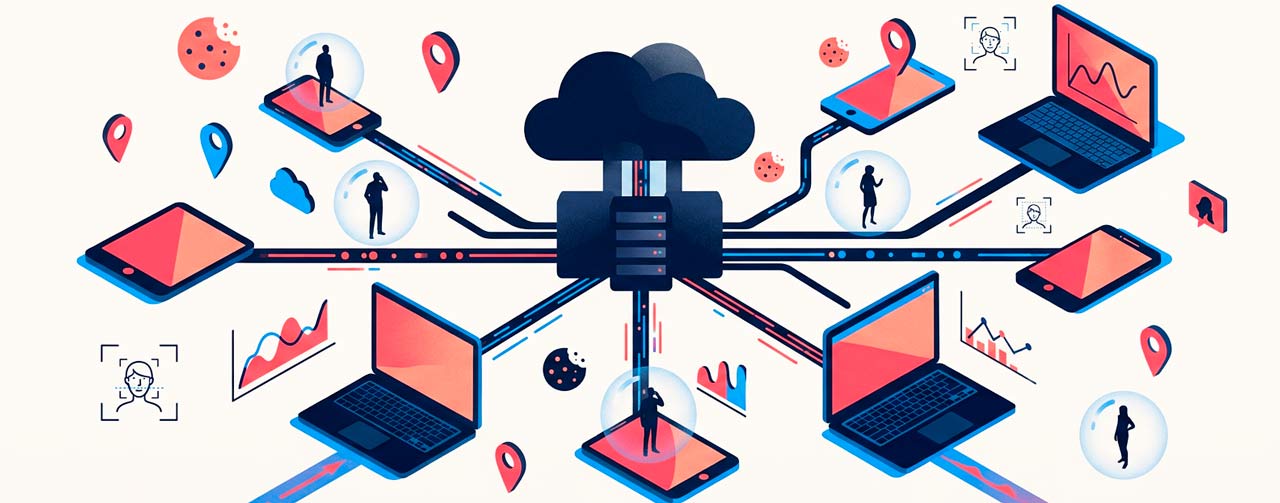
How Your Data Is Actually Collected
Every interaction with a digital device generates data. Here is what gets collected, how, and what happens to it:
| Data Type | How It’s Collected | What It’s Used For | Can You Control It? |
|---|---|---|---|
| Browsing history | Cookies, trackers on websites | Behavioural profiling, ad targeting | Partially – use tracker blockers |
| Location | GPS, Wi-Fi, cell towers | Geotargeted ads, location profiling | Yes – disable location services per app |
| Biometrics | Facial recognition in filters/photos | Identity verification, ad targeting | Limited – avoid face-scanning filters |
| Social graph | Friend lists, follows, interactions | Influence mapping, recommendations | Minimal – platforms rarely let you opt out |
| Content you create | AI analysis of posts, images, messages | Moderation, interest profiling, ad targeting | Very limited – once posted, it’s processed |
| Behavioural patterns | Scroll speed, pause duration, tap patterns | Engagement optimization | No user controls exist |
The eGirls Project documented this dynamic extensively. The economic model behind e-commerce – disclosure of information in exchange for services – leads youth to generate massive data trails. Research showed that young women were often acutely aware their data was collected, yet felt powerless to control the process. Early platforms like Nexopia demonstrated this tension – old Nexopia profiles still persist as digital footprints years after the platform’s decline, illustrating how youth data outlives the services that collected it.
The eGirls Project’s Approach: Equality Lens on Cyberbullying
The eGirls Project analyzed cyberbullying through an equality lens – examining how online harassment intersects with gender, sexuality, race, and class. This was captured in the book “eGirls, eCitizens: Putting Technology, Theory and Policy Into Dialogue with Girls’ and Young Women’s Voices.” Researchers from the eQuality Project (an offshoot of the eGirls Project) discussed the use of concept mapping and Q-Methodology to map how young people understand and experience online harassment differently based on their social position.
This remains relevant because generic anti-bullying programs that treat all harassment as identical peer conflict continue to miss the structural dimensions of online abuse.
Canadian Policy: Where Things Stand (April 2026)
| Law/Initiative | Status | What It Does |
|---|---|---|
| Federal privacy reform (post C-27) | Expected in Parliament 2026 | Rights-based protections, stronger enforcement, modernized consent |
| Bill C-216 | Reintroduced June 2025 | Requires platforms to protect minors’ privacy, health, well-being |
| Bill S-209 | In Senate | Age assurance for harmful content sites |
| Bill C-63 (Online Harms Act) | Died on order paper; government signals fresh approach | Would have required age-appropriate design features |
| OPC Children’s Privacy Code | Consultation completed August 2025 | Framework for how platforms must handle children’s data |
| Quebec Law 25 | Fully in effect since Sept 2024 | Comprehensive data protection, including children |
| Alberta PIPA amendments | Expected 2026 | Specific children’s privacy obligations recommended |
“I have identified my priority recommendations for modernizing our federal private-sector privacy law because they would strengthen key regulatory powers and address systemic issues.”
– Philippe Dufresne, Privacy Commissioner of Canada (October 2025)

Privacy Protection Checklist: What You Can Do Today
| Action | What It Does | Time Needed |
|---|---|---|
| Audit privacy settings on every platform | Limits who sees your content and who can contact you | 15 min/platform |
| Turn off location services for social apps | Stops geotagging posts and feeding location data | 2 minutes |
| Install a tracker-blocking browser extension | Reduces cross-site tracking by 70-90% | 5 minutes |
| Review and revoke unnecessary app permissions | Stops apps from accessing camera, mic, contacts without need | 10 minutes |
| Enable two-factor authentication everywhere | Prevents account takeover even if password leaks | 5 min/account |
| Search your own name monthly | Shows what information about you is publicly visible | 10 minutes |
| Use different email addresses for social vs. important accounts | Limits damage if one account is compromised | 15 minutes one-time |
| Delete old unused accounts | Reduces your data footprint across abandoned platforms | Varies |
Digital Citizenship Skills: What Schools Should Teach
MediaSmarts identifies seven essential digital literacy skill areas that students should develop by the end of secondary education: ethics and empathy, privacy and security, community engagement, digital health, consumer awareness, finding and verifying information, and making and remixing content.
Common Sense Education offers free curriculum covering six themes: healthy habits, privacy and safety, digital footprint and identity, relationships and communication, cyberbullying and online harms, and information and media literacy. These resources are research-backed and classroom-ready for grades K-12.
The eGirls Project’s collaboration with MediaSmarts demonstrated that privacy education is most effective when it explains the economics behind data collection – not just the rules. Young people need to understand why platforms collect data, what business models depend on it, and how algorithms use it to shape their experience.