
Research, Publications, and Team: The Full Record of The eGirls Project
This page documents the academic record of The eGirls Project (2011-2015): who did the research, how they did it, what they published, and how to access the outputs. It’s designed to be useful for researchers, students, and anyone who wants to understand the methodology behind the findings cited elsewhere on this site.

Research Methodology: How the Study Was Done
The eGirls Project used qualitative methods centred on the voices of its participants. Here is the full methodological picture:
| Component | Detail |
|---|---|
| Participants | 34 female teens and young adults aged 15–22 across Canada |
| Primary methods | Semi-structured interviews, focus groups |
| Analytical tools | Concept mapping, Q-Methodology (later expanded in eQuality Project) |
| Funding | 3-year SSHRC Partnership Development Grant |
| Disciplinary scope | Law, criminology, communication studies, information studies, public policy |
| Distinctive approach | Participants treated as experts on their own experiences, not passive subjects |
| Ethical framework | University of Ottawa Research Ethics Board approval |
Professors Bailey and Steeves kicked things off by sharing some of their research findings with academic and policy communities, then progressively deepened the analysis through iterative coding and thematic analysis. The research was designed as a partnership investigating the relationship between gender, privacy, and online social networking.
Key Thematic Findings
Here are the five major themes that emerged from the research, along with their practical implications:
| Theme | What They Found | Practical Implication |
|---|---|---|
| Privacy as Negotiation | Girls manage multiple audience contexts simultaneously; privacy is not binary | Consent-based privacy regulations miss how youth actually behave online |
| Platform Design Shapes Gender | Like buttons, templates, algorithms reward narrow gender expression | Platform design review should include gender impact assessment |
| Behavioural Targeting Is Gendered | Young women receive disproportionate appearance/consumption-oriented ads | Targeted advertising regulation needs to account for gendered effects |
| Cyberbullying Intersects With Inequality | Online harassment maps onto existing hierarchies of gender, race, sexuality | Generic anti-bullying programs miss the structural dimensions of abuse |
| Youth Have Agency | Girls develop sophisticated strategies for managing their online presence | Policy should build on what young people already do, not assume helplessness |
The Book: eGirls, eCitizens (uOttawa Press, 2015)
The project’s landmark publication is “eGirls, eCitizens: Putting Technology, Theory and Policy Into Dialogue with Girls’ and Young Women’s Voices,” edited by Jane Bailey and Valerie Steeves. Available for purchase or as a free electronic download from uOttawa Press.
Chapter Themes
| Area | Covered Topics |
|---|---|
| Privacy and digital identity | How girls negotiate audience management across platforms |
| Gender performativity | How digital affordances of social networking practices mediate teens’ gender and sexual cultures |
| Policy discourses | How policymakers construct girls in regulatory and educational frameworks across jurisdictions |
| Online equality | Privacy, equality, and gender implications of the digital environment |
| Digital citizenship | Frameworks for learning and negotiation of social and cultural norms and values online |
Contributors: Jacquie Burkell (Western University), Priscilla Regan (George Mason University), Leslie Regan Shade (University of Toronto), Madelaine Saginur (University of Ottawa), Trevor Scott Milford, Sarah Heath, with invited essays from additional scholars.
Conference Presentations and Policy Engagement
| Date | Event | Presentation/Activity |
|---|---|---|
| June 2015 | Congress of Social Sciences & Humanities, University of Ottawa | Two panels: CCA roundtable on eGirls, eCitizens + author-meets-reader at Canadian Law & Society Conference |
| June 2015 | eGirls, eCitizens book launch | Expo Event Space, Montpetit gym, University of Ottawa |
| Jan 2015 | Data Privacy Day, Calgary | Bailey: “The eGirls Project: Gender, Privacy and Equality in Online Social Networking” |
| Jan 2015 | 8th International Computers, Privacy and Data Protection, Brussels | Steeves: feminist perspectives on privacy; surveillance in education |
| Dec 2014 | Canadian Access and Privacy Association, Ottawa | Bailey & Steeves: young Canadians in a wired world; gender, privacy, cyberbullying |
| Nov 2015 | South Korean delegation meeting, University of Ottawa | Discussion with 7 officials (National Human Rights Commission, Ministry of Justice, Anti-Corruption Commission) on hate propaganda and cyberbullying |
| Various | MediaSmarts partnership | Outreach materials on gender & media, body image, online privacy for K-12 classrooms |
The South Korean delegation meeting included participation from eQuality Project members Leslie Regan Shade, Sarah Heath, and Dillon Black of the Ottawa Coalition to End Violence Against Women.
The Research Team
Project Leadership
| Name | Role | Affiliation |
|---|---|---|
| Jane Bailey | Co-leader | University of Ottawa, Faculty of Law |
| Valerie Steeves | Co-leader | University of Ottawa, Department of Criminology |
With Dr. Valerie Steeves of the Department of Criminology on The eGirls Project, which was funded by a 3-year SSHRC Partnership Development Grant, the initiative drew on expertise spanning law, social science, and technology studies. Both subsequently co-led the $2.5 million SSHRC Partnership Grant funding The eQuality Project.
Senior Researchers
| Name | Institutional Affiliation | Expertise Area |
|---|---|---|
| Jacquie Burkell | Western University, Faculty of Information and Media Studies | Information behaviour, privacy |
| Priscilla Regan | George Mason University, Dept. of Public and International Affairs | Privacy policy, surveillance |
| Leslie Regan Shade | University of Toronto, Faculty of Information | Digital rights, gender and technology |
| Madelaine Saginur | University of Ottawa | Privacy law, digital regulation |
Student Researchers
Graduate students and early-career scholars contributed to every stage: data collection, analysis, outreach, and publication. Several co-authored chapters in eGirls, eCitizens. The interdisciplinary training – spanning law, criminology, communication, and technology – served as a launching pad for careers in law, policy, education, and digital rights advocacy.
Student researchers participated in outreach through MediaSmarts and presented at national and international conferences. As the research expanded into The eQuality Project, many former students continued their involvement.
How to Access the Research
| Resource | How to Access |
|---|---|
| eGirls, eCitizens (full book) | Free download from uOttawa Press website |
| Individual chapters | Available through uOttawa Press and academic databases |
| Research memos and backgrounders | Originally hosted on egirlsproject.ca; archived versions available |
| Current research (eQuality Project) | equalityproject.ca |
| MediaSmarts resources | mediasmarts.ca/teacher-resources |
| SSHRC project record | SSHRC awards database |
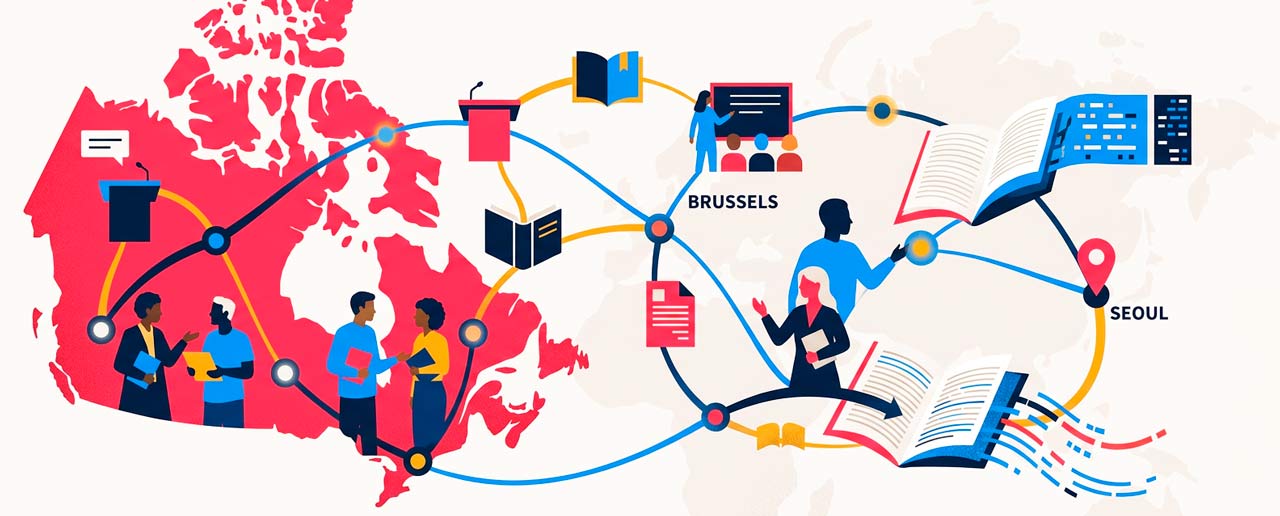
The eGirls Project was one of only 15 chosen by SSHRC from a highly competitive pool of over 100 researchers across the country. Its international engagement – from Brussels to Seoul – demonstrated that the questions it asked about gender, privacy, and youth online resonated far beyond Canadian borders.